Wednesday, April 19, 2006
Looking for Signs of a Bipartisan Sea Change on George W. Bush?
Carl Bernstein, the anti-Woodword, has published a remarkable piece in Vanity Fair, in which he calls for bipartisan hearings this year investigating the Bush presidency and asks the question, should Republicans on the Hill take the high road and save themselves come November?
Elsewhere, I have parsed Bernstein's piece, (albeit not too parsimoniously).
The mounting criticism of Rumsfeld from Republican politicians is directed at diverting blame from themselves for following, aiding and abetting Bush. Just as criticism from retired military is intended to divert blame away from the military which followed, aided and abetted Bush. Both want separation from Bush and by dramatically increasing degrees.
Those of us on the Progressive side are encouraged. We have welcomed signs of a sea change from GOP leaders on the un-provoked, unnecessary, unplanned, and largely unilateral invasion and occupation of Iraq (UUULUIOI), on the incredibly mounting debts Bush has run up, and especially, finally, and penultimately on Bush himself.
Progressives want this 2006 election to be a referendum on impeachment: Congressional majorities are needed to hold oversight hearings and issue subpoenas. But nutcase saber-rattling and brinkmanship by the two demagogues, Ahmadinejad and Bush, make oversight much more urgent.
We need a Republican leader to stand up and tell Bush to stand down.
It's nice that George Will, Bob Barr, William Buckley, Bruce Bartlett, and Pat Buchanan all have a strong case of buyers' remorse.
What is needed to document a sea change on Bush himself is the same thing which is needed for a press/media event: it has to be a Republican office holder.
Richard Lugar came out this week or last for talks with Iran. That was nice, but Richard looks too nice and so gentle with his frozen smile. And hell will freeze over and Tehran will glow before chairman of the Senate Judiciary Committee, Arlen Specter grows a pair.
We know where the Senator from Arizona is headed. At his advanced age, McCain wants so much to be President that he's willing to reinvent himself, courting the dixiecrats and the theocrats to grab at Bush's remnants. Why, he's even willing to out-Rumsfeld and out-Bush by calling for more troops and perhaps (by implication) a draft.
For those looking for historical parallels: LBJ had his obsequious vice-president, Hubert Horatio Humphrey; GWB has only his leader Cheney who's a dog who won't hunt (with others, anyway); so, it must fall to McCain to be the ultra-loyalist, entitlement candidate and reprise HHH.
But who's the other distinguished Vietnam Vet serving on the Republican side in the Senate? Who's that other GOP senator from a western state who has spoken out very critically on the UUULUIOI? And what does he have to lose by getting up out of his chair? Does he have a presidential chance against McCain's momentum?
I say he does have one chance. And I bet he's thinking about it.
If you're looking for a sea change, a tipping point, keep one eye on Chuck Hagel.
Wednesday, April 12, 2006
Retain Rumsfeld!!!
Three retired generals have joined the chorus calling for the resignation or firing of Secretary of State Donald Rumsfeld. It’s abundantly clear that some one should go, with all the mistakes that have been made. But so far no one has lost a job over the intelligence failures that led to 9/11 or the war that was trumped up and velcroed to 9/11. Those who 'have moved on' have received heck-of-a-job attaboys, if not Presidential Medals of Freedom. In fact, the only people the president and vice president have ousted or outed have been critics and spouses of critics.
Heads should have rolled along with the serial discarding of each of the reasons given for this unilateral and unprovoked invasion and occupation. First there was the faulty intelligence that cited existence of Iraq’s al Qaeda ties, possession of WMD, efforts to buy uranium. Despite the President's claims he got “darn good intelligence”, it was faulty beyond a shadow of a doubt, and no heads rolled for that; certainly not George “Slam Dunk” Tenet. All we were offered were finger-pointing “it was the other guy” alibis.
After the intelligence gap came the post-war planning gap. This was a bi-product of the strategic doctrine, contrived as early as 1996, that we could go into Iraq “lean and mean”, and achieve “shock and awe” with a smaller, modernized military machine. No one in the Administration would listen to those in and out of government who had negative things to say about the complexities occupation would bring; to do so would have increased the cost estimates of the entire operation and would have reduced chances of winning Congressional complicity in the campaign. The non-deliberate manner in which discussions and "debates" were conducted in the cabinet or Congress meant that no one in the system of checks and balances had a clue about what the administration was getting our military into.
This blithe confidence, epitomized by Rumsfeld, that Bush could run his war on the cheap has also seriously harmed the Army and the National Guard. The armed services are over-extended. Re-enlistment rates for both are down. Troops exquisitely trained for combat proved ill-suited for rebuilding infra-structure, policing and care of prisoners.
Rumsfeld also has direct and conspicuous responsibility for abuse of prisoners in Abu Gharib and GITMO, as a New York Times editorial pointed out two years ago:
The United States has been humiliated to a point where government officials could not release this year's international human rights report this week for fear of being scoffed at by the rest of the world. The reputation of its brave soldiers has been tarred, and the job of its diplomats made immeasurably harder because members of the American military tortured and humiliated Arab prisoners in ways guaranteed to inflame Muslim hearts everywhere. And this abuse was not an isolated event, as we know now and as Mr. Rumsfeld should have known, given the flood of complaints and reports directed to his office over the last year.
Personally, I like and admire Rumsfeld. His slick confidence, flippant sarcasm, and articulate deviousness epitomizes and perfectly represents the Bush presidency. As a walking-talking symbol of the cabinet, he would be sorely missed.
With him gone, will GWB’s burdens be lightened? I think so. And also the burdens of many Republicans who are bent on stealing their re-election. Rumsfeld as a familiar and lingering liability of Bush is very unpopular among the military. Let's not lose this familiar face yet! He goes when his man George goes.
Two years ago when I last wrote against 86-ing Rummy, one of the arguments was that if he went, so would his lethal gang composed of Douglas Feith, Paul Wolfowitz, Richard Perle. But these lesser war criminals have already escaped the chickenhawk coop.
And that is really the crux. Retention of Rummy keeps the invalidation of the preventive war doctrine 'on the table'!
I want two more years of Rumsfeld. Like a rat who's leg is caught in a trap, Bush would like to chew it off if he could do it in the dark. We should not promote or facilitate such a sacrifice. As it is, Rummy serves us better as a chicken tied around the chickenhawk-in-chief's neck.
Maybe the termination of Donald Rumsfeld, as they say, would be 'a good start'. But we already have a good start on Bush. As long as Big Don's around, he enlarges the target; gone, he is an alibi.
Remember, it wasn’t - and isn't - just Don’s fault. The essential goal is termination of Bush, not Rumsfeld.
Addendum: (26 September 2006):
Today, Maj. Gen. John R.S. Batiste, Retired Colonel Paul Hammes, and Retired Major General, Paul Eaton spoke before the Senate Democratic Policy Committee, a rump group with little legislative clout but access to a proper Senate hearing room. And Batiste made up for lost time.
General Batiste, who commanded the 1st Infantry Division in Iraq in 2004 and 2005 and served as a senior military assistant to former deputy defense secretary Paul Wolfowitz, charged that Rumsfeld and others in the Bush administration did not tell the American people the truth for fear of losing support for the war in Iraq.
If we had seriously laid out and considered the full range of requirements for the war in Iraq, we would likely have taken a different course of action that would have maintained a clear focus on our main effort in Afghanistan, not fueled Islamic fundamentalism across the globe, and not created more enemies than there were insurgents . . . . is not a competent wartime leader and surrounded himself with compliant subordinates.
Secretary Rumsfeld ignored 12 years of U.S. Central Command deliberate planning and strategy, dismissed honest dissent, and browbeat subordinates to build 'his plan,' which did not address the hard work to crush the insurgency, secure a post-Saddam Iraq, build the peace and set Iraq up for self-reliance . . . . refused to acknowledge and even ignored the potential for the insurgency. . . . At one point, he threatened to fire the next person who talked about the need for a post-war plan.
Secretary Rumsfeld's dismal strategic decisions resulted in the unnecessary deaths of American servicemen and women, our allies, and the good people of Iraq. He was responsible for America and her allies going to war with the wrong plan and a strategy that did not address the realities of fighting an insurgency.
Monday, April 10, 2006
Seymour Hersh's Blockbuster
It may be too much to say that it can change history; perhaps good and timely journalism has only a shot at nudging history.
Seymour Hersh has done that before with his historic breaking of the My Lai Massacre story in 1969, a Pulitzer Prize winner. His investigatory spotlight also lit up the Abu Ghraib prison story. His critics argue he has been more wrong than right. No one is right all of the time. But Hersh's track record is that some of the time, he has been very, very good in getting his story right. That should motivate us to focus on some of the highlights of his 7,000 word piece in the New Yorker.
- Bush is ready to go to war to save Israel which has not yet been attacked and which can defend itself.
- Bush has a messianic drive to save Iran from itself.
- A preemptive attack on Iran will unify its disparate political elements.
- Proliferation of nuclear weapons to Iran may be only Bush's pretext for regime change.
- We may already be at war with Iran if we have clandestine troops within its borders.
- The use of tactical nuclear weapons for a preemptive war is a thinkable proposition for contemporary civilian war planners in the Pentagon. (Only a very few of my readers will remember how we debated with Herman Kahn in the 1960's the merits of his theory of tactical nuclear war.)
- Ironically, one of the few brakes on this war mongering juggernaut (while Congress remains in GOP control) may come from the ranks of the professional military officer corps in the Pentagon.
- In contemplating an air war to be waged against Iran, there does not seem to be any serious contingency planning for the most obvious repercussions: Iranian ground attacks in Iraq and Afghanistan; Hezbollah revivals on steroids throughout the Middle East; unification of the regional Shiites and Sunnis against us; dispersal of Iran's uranium outside her borders into the hands of whatever terrorists who get lucky.
I submit that even if none of Hersh's nightmares materialize, he will not be discredited: not as long as there is a possibility that preemptive war was deterred or delayed by preemptive journalism.
Crossposted
Thursday, April 6, 2006
The No-Good-News-Reported-In-Iraq Paradox
What kind of logic is this?
How can people in one breath complain that there is not enough of the good news being reported in Iraq and say, in the very next breath, that it's just too unsafe for reporters to venture out of the Green Zone to report it?
I just don't get it.
I have forgotten my freshman course in logic. Is this a syllogism? Is it reductio ad absurdum?
Can someone help me out with this?
Wednesday, April 5, 2006
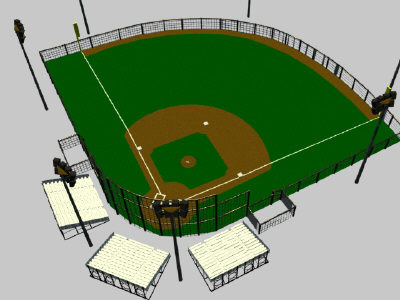
The Perfectly Logical and Symmetrical Baseball League (PLASBL)
Major League Baseball isn't broken. But it's not perfect.I’m not aspiring to higher office. I’ll just settle for succeeding Bud Selig as commissioner of baseball. This is my nine-point platform and I’m sticking to it.
- Plank #1: Eliminate the designated hitter rule. This is long over due. Going back to sandlot baseball, every one had to take his (or her) turn at shagging balls in order to merit a turn at bat. “DH” baseball is just pseudo-baseball, quasi-baseball, crypto-baseball, proto-baseball, near-baseball, old-man or geriatric baseball. Real baseball means that each starter has an offensive as well as a defensive role to play. In real baseball, if some one gets 400 at bats, you know he has at least minimal skills with glove and arm. Real baseball saves starters' arms, provides more strategic drama to the game, gets more players into the game, and provides a built-in deterrent for the bean ball. Enough ink has already been spilled on this. If you want a platoon sport, settle for football or slo-pitch.
- Plank # 2: Enforce the real strike zone. The strike zone is over the white of the plate, above the knees and below the arm pits, when the batter is in his normal hitting stance. The upper level of the strike zone is not determined by the catcher's head or shoulders. When umpires went to the inside protector, they started depending on the catcher for protection, at the expense of the optimal position. Thus, the zone has evolved into a wider, flattened area in which pitchers get calls on pitches inches off the outside corner. On the other hand they wouldn’t get the pitch above the belt called as a strike. There was no consistency. Pitches so far outside that no batter could reach them would go for strikes. Or, on the other hand, pitches in the legal zone would be called balls and the guy on the mound would be forced to throw one right down the middle. How many games were broken up by the pitcher surrendering to the umpires’ idiosyncrasies by watching his next pitch bang against the outside wall? How many innings were ended by pitches way off the plate which couldn’t be reached by the normal bat? The outside protectors might have been clumsier and maybe they don’t give you the same mobility. But I have had the experience of umping with both protectors, and I can say that with the outside protector you could work the top of the strike zone better and see the entire plate at a higher level. The dullest play in baseball is the unintentional walk, because it is mixed in with strikes. By calling the entire strike zone by the book, you won't see as many 3-and-1 and 3-and-2 counts on batters. Hitters, in other words, will gear themselves to be more aggressive on pitches coming in at chest level. Fewer walks mean more action and shorter games.
Therefore, MLB should return to the use of outside protectors. Additionally, the use of computerized technology called QuesTec should be installed in all stadiums to grade and rate umpires’ compliance with baseball’s book definition of the strike zone. - Plank # 3: Restore the level of the pitching mound to 15 inches over the level of home plate. After the 1968 season it was lowered five inches to the detriment of drama of baseball. Now, with batters crowding the plate with all kinds of body armor, the balance of power must be restored with a more unlevel playing field.
- Plank # 4: Adopt the aluminum bat. Somebody has published statistics about the amount of wood that goes into the construction of wooden bats, which is a highly consumable commodity, unique to major league baseball. It's an environmental and economic disaster. Aluminum bats are virtually indestructible.
- Plank #5: Re-engineer the construction of baseballs to deaden them. This is a consequence of the previous innovation. As a matter of safety for pitchers and infielders some changes to the ball will be required to accommodate aluminum bats which are definitely more lively than wood.
- Plank #6: Re-align divisions to emphasize regional rivalries and re-establish symmetry to league schedules. Back when we had two eight-team leagues we had perfect symmetry: during the season each team played every other team in its league 22 times, 11 home game and 11 on the road for a total of 154 games in the season. Perfect. The only negative was the lack of inter-league play. What if we could combine inter-league play, still retain perfect symmetry and build in a higher degree of drama as the season unfolds? Assume the following league alignment:
Two teams have been added to bring each league up to eight teams. Assume the season schedule starts with inter-league play on 1 April. Each team would play every other team outside its league four times, two at home, and two on the road. That would come to 96 games bringing the calendar up to about the second week in July, just in time for mid-season all-star game. I think that works out pretty nicely, leaving details to be ironed out using days off for travel on one side of the equation and inserting a few double headers as necessary. After the All-Star game, assume the season resumes on 14 July (Bastille Day!). From this point on to the end of the season, only intra-league games are played. Each team plays every other team in its own league 10 times, five at home and five on the road. If the schedule ends on 30 September, there will ample time to get 70 intra league games in to make a total of 166 games in the season. Too bad it doesn’t work out to be somewhere between 154 and 162. It does mean the schedule contains more games than ever before in MLB history. But so what, really? Look what we get: after spring training, we get 96 games which certainly count in league standings; starting in mid July we get heightened competition within each league for the league championships. When the second half of the season starts, each team knows what it has to do vis-à-vis the other teams in its league, mano-a-mano. No alibis on extra-league competition. Plus, with my geographical alignments, the competition is regionalized, even localized! Hot!- WESTERN LEAGUE: Seattle, Oakland, San Francisco, Los Angeles, Anaheim, San Diego, Denver & Phoenix
- SOUTHERN LEAGUE: Dallas, Houston, St. Louis, Kansas City, Atlanta, Miami, Cincinnati & Tampa Bay
- CENTRAL LEAGUE: Chicago (WS), Chicago (C), Pittsburgh, Cleveland, Milwaukee, Minneapolis, Detroit, & Indianapolis
- EASTERN LEAGUE: New York (Y), New York (M) Montreal, Baltimore, Boston, Philadelphia Toronto & Washington DC
- WESTERN LEAGUE: Seattle, Oakland, San Francisco, Los Angeles, Anaheim, San Diego, Denver & Phoenix
- Plank #7: Re-establish symmetry to league post-season play-offs. There hasn’t been symmetry since eight team National & American league champions faced off against each other in the World Series. End intra-league divisions. No more wild cards. Establish four leagues with an equal number of teams in each league. The first team to clinch a league championship plays host in a seven game series to the last team to clinch a championship; the second team to clinch its league similarly plays host to the third team to clinch. The winner of each series plays each other in the World Series. Perfect Symmetry!
- Plank #8: No Reinstatement of liars, cheaters, gamblers and scumbags! Pete Rose should be reinstated into baseball, but only posthumously, and then inducted into the Hall of Fame. What he has done between the chalk lines is too big to permanently exclude his record from the Hall of Fame, and it would sure be incomplete without his records. But what he has done to Baseball outside the lines has been so potentially fatal, that he cannot be permitted to enjoy Hall of Fame status in his life time.
- Plank #9: Legislate or dictate (using my “best interests of baseball” powers), over the protests of the Union, a policy of zero-tolerance of performance–enhancing drugs. This 3 strikes & you’re out policy shall not be retroactively enforced.
Monday, April 3, 2006
REAL SECURITY: The Democratic Plan
On 29 March, Democratic leaders across the country joined House and Senate Democrats and unveiled a comprehensive plan for providing the American people with real security.
The Democratic plan, entitled "Real Security: The Democratic Plan to Protect America and Restore Our Leadership in the World, is supposed to outline a 'bold vision' for how Democrats will lead on National Security.
It's not too great on specifics, and there are some platitudes; but it does offer fresh thinking on the big issues facing Americans. These are my clips on the five general issues:
This statement is what it is. It's a step toward finding a position on the anti-terrorsim and national security issues upon which all Democrats, excepting Joe Lieberman, can agree.
- REAL SECURITY: The Democratic Plan to Protect and Restore Our Leadership in the World: ....To protect the American people, we will immediately implement the recommendations of the independent bipartisan 9/11 Commission and finally protect our ports and airports, our borders, mass transit systems, our chemical and nuclear power plants, and our food and water supplies from terrorist attack....After September 11, all Americans trusted President Bush to take the steps necessary to keep our country safe. Since then, inadequate planning and incompetent policies have failed to make Americans as safe as we should be.
After September 11, all Americans trusted President Bush to take the steps necessary to keep our country safe. Since then, inadequate planning and incompetent policies have failed to make Americans as safe as we should be....
Under President Bush and the Republican majority in Congress, the war in Iraq began with manipulated intelligence and no plan for success; our ports and other critical infrastructure remain vulnerable, while both soldiers in the field and first responders at home lack the basic equipment and resources they were promised. Both in the Persian Gulf and our own Gulf Coast, lucrative no-bid contracts have gone to companies such as Halliburton, Kellogg, Brown and Root, and others with friends in high places and records of cheating taxpayers...- 21st CENTURY MILITARY: To Ensure Unparalleled Military Strength and Honor our Troops, we will:
....Guarantee that our troops have the protective gear, equipment, and training they need and are never sent to war without accurate intelligence and a strategy for success.
Enact a GI Bill of Rights for the 21st Century that guarantees our troops -- active, reserve, and retired -- our veterans, and their families receive the pay, health care, mental health services, and other benefits they have earned and deserve.
Strengthen the National Guard, in partnership with the nation's Governors, to ensure it is fully manned, equipped and available to meet missions at home...- WAR ON TERROR: To Defeat Terrorists and Stop the Spread of Weapons of Mass Destruction, we will:
Eliminate Osama Bin Laden, destroy terrorist networks like al Qaeda, finish the job in Afghanistan, and end the threat posed by the Taliban.
Double the size of our Special Forces, increase our human intelligence capabilities, and ensure our intelligence is free from political pressure.- HOMELAND SECURITY: To Protect America from Terrorism and Natural Disasters, we will: Immediately implement the recommendations of the independent, bipartisan 9/11 Commission including securing national borders, ports, airports and mass transit systems.
Screen 100 percent of containers and cargo bound for the U.S. in ships or airplanes at the point of origin and safeguard America's nuclear and chemical plants, and food and water supplies.
Prevent outsourcing of critical components of our national security infrastructure -- such as ports, airports and mass transit -- to foreign interests that put America at risk.- IRAQ - To Honor the Sacrifice of Our Troops, we will:
.... Hold the Bush Administration accountable for its manipulated pre-war intelligence, poor planning and contracting abuses that have placed our troops at greater risk and wasted billions of taxpayer dollars.- ENERGY INDEPENDENCE: To Free America from Dependence on Foreign Oil, we will: (offer platitudes?)
Its best feature is that paints Osama Bin Laden (about whom Bush rarely thinks anymore) back in the center of the bullseye and Afghanistan as the center ring. The primary issue should be the capture of the 9-11 mastermind, and the rebuilding of the nation-state which his Taliban hosts ruined.
Also on the top tier is the fundamental issue of homeland security: border, ports, airports, containers, and mass transit systems; repairing and securing our national infrastructure. That sort of things - all those which Bush has not been able to fund because of his ruinous war of choice in Iraq.
Although not in so many words the statement brand Bush's vanity war as an un-provoked, unnecessary, unplanned, under-funded and largely unilateral invasion and occupation of Iraq (UUUULUIOI). This document squarely promises to make clear that this war to be the defining element in Bush's legacy:
Other issues such as the GI Bill of Rights for the 21st Century anti-nuclear proliferation and energy diversification are platitudes; but these are useful because they highlight other Bush promises which have not been implemented by his one-party government in six years.Hold the Bush Administration accountable for its manipulated pre-war intelligence, poor planning and contracting abuses that have placed our troops at greater risk and wasted billions of taxpayer dollars.
All in all, a good start.
Sunday, April 2, 2006
Open Thread
April Fools has passed, so....
Couldn't start anything on April 1st, could I?
First things first: I'm hoping all my old and not so old friends and associates from Sozadee CA will accompany me into this new venue and resume the same Vigil we began more than two years ago.
Secondly, I want to discuss, perhaps on this thread, my reasons for making this particular change at this particular time. I don't have those thoughts together right at this moment. But, if I don't get to that in a few days, prompt me.
As it is appropriate that you prompt me and others, on a whole lot of things in here.