skip to main |
skip to sidebar
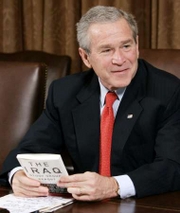
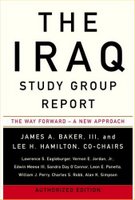 I've seen enough. This is mandatory reading for the American people because it is primarily addressed to us.
Basically, this is a Shoulda Woulda Coulda indictment on American foreign policy in the Middle East during Bush and Cheney's 'watch' (for lack of a better word). This is a description of their crime scene. Their criminal indictment will have to wait a while longer.
The New York Times says that ISG member Sandra Day O’Connor served  as an exacting editor and insisted that the report be written and organized so that it could be readily understood by people who are not foreign policy wonks or pundits. I think we should all embrace this Report as a document addressed to us, the American people.
It is neither a complete nor a compleat statement on Bush's un-provoked, unnecessary, largely unilateral invasion and unplanned occupation of Iraq (UULUIUOI).
It is a list of set of policies needed for moving forward to reduce further damage to ourselves, the Iraqi people, and to the critical area of the Middle East - with no guarantee that, in these circumstances, that they will be sufficient or timely. Co-chairs, Baker and Hamilton caution that Bush and Cheney have weeks, not months, and maybe days” to move to halt the deterioration in Iraq. And that "people talking about very elongated time frames" for developing a new strategy will not serve America well because the moment for effective action already may have passed. In this context, I feel that it's critical that my fellow Americans pay special attention to three basic admonitions.
- The ISG Report is not a 'fruit salad' to be cherry-picked:
. . . . altogether in this report we make 79 recommendations. In addition to military, political and diplomatic recommendations, which . . . are equally important and reinforce each other . . . It’s a comprehensive strategy designed to deal with the problems in Iraq, but also to deal with other problems in the region. These are interdependent recommendations.
Events in Iraq could overtake what we recommend. And for that reason, we believe that decisions should be made by our national leaders with some urgency.
- And a social contract between Americans is recoverable:
We believe that a constructive solution requires that a new political consensus be built, a new consensus here at home . . . We also hope that our report will help bridge the divide in this country on the Iraq war and will at least be a beginning of a consensus here. Because without that consensus in the country, we do not think ultimately you can succeed in Iraq.
I have reservations. You have reservations. But you and I could come together if Bush and Cheney would only eat their fruit salad in total. If they refuse, then they should be made to eat their vanity war before they are excused from the table. Progressives should demand that Bush and Cheney should be excused from the White House by November 2008, or our troops are excused from Iraq by the same date.
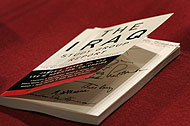 In the meantime, I have ordered my copy of The Way Forward - A New Approach. I plan to read it. But more important than that: I plan to carry it around with me as I go shopping, to work, to walk my dog, to wait in the doctor's office. I intend it to become my own personal bumpersticker. Wherever I am, it will say to everyone who notices,
I have a stake in my country's struggles. I am not a consumer. I am not a spectator. I will fight for my country, in the streets if need be.
Because I believe if the 110th Congress cannot secure the return of our troops, the American people must.
The Iraq Study Group Says:
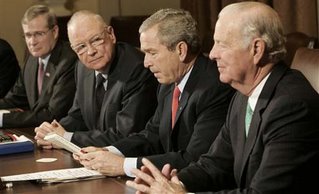 The Situation In Iraq Is Grave And Deteriorating . . . A Risk Of A ‘Slide Toward Chaos which Could Trigger The Collapse Of Iraq's Government And A Humanitarian Catastrophe. . . . The Global Standing Of The United States Could Be Diminished.
The wheels of the Bush-Cheney unilateral and unidimensional runaway train in the Middle East have come off. In 142 pages, this report reports bi-partisan certification that NeoConservative policies have been fundamentally flawed:The United States cannot achieve its goals in the Middle East unless it deals with the Israeli — Arab conflict and regional instability. . . . Talks should include Israel, Lebanon and Palestinian leaders who recognize Israel's right to exist.
Does the ISG Report strike any sparks illuminating glimpses of truth?Our report makes clear that the Iraqi government and people also must act to achieve a stable and hopeful future . . . . The most important questions about Iraq's future are now responsibility of Iraqis.
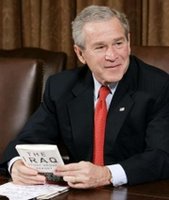 Yes. This is an understatement. Iraq is in free-fall; a free-for-all civil war worse than Lebanon's in 1975-1989. The 'Ballotocracy' installed by Rumsfeld has no writ in Iraq or even in Baghdad; it does not extend beyond the Green Zone. At this point there is no secure land corridor between Baghdad and the Baghdad 'International' Airport. Maliki is a bureaucrat who has to be virtually handcuffed to his bodyguards (are they mercenaries or Peshmergers?) every time he ventures out in the open. Civil war is raging and it will rage for some time, regardless of American presence.
Another truth: practically all Iraqis agree on this:Yet the United States must not make open-ended commitments to keep large numbers of troops deployed in Iraq.
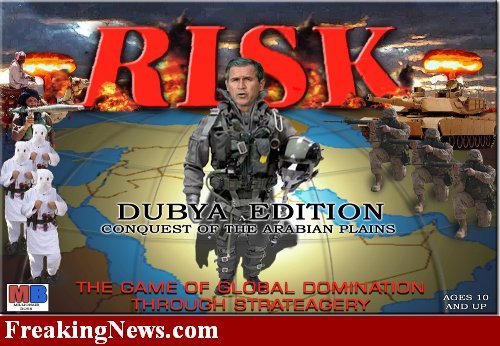
The Iraqis are convinced that Bush's un-provoked, unnecessary, largely unilateral invasion and unplanned occupation of Iraq (UULUIUOI) is ultimately designed to capture their oil. And that the ulterior purpose our armed presence was to make their oil, our oil. And the tangible proof of 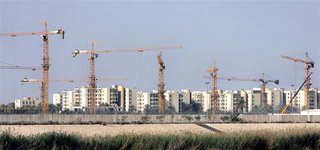 this is the permanent Gibraltar-like fortress which we have been constructing since we landed. Bush and Cheney's policy has never contradicted this fear.
The ISG Report adrift in unreality. I think this is a symptom of the members of the Group struggling with the issue as to how much truth the American people can take at this moment in time without being shocked and awed by the true dimensions of this foreign policy disaster into which their own complacence - largely - has delivered them.
The ISG report says:All options have not been exhausted. It is still possible to pursue different policies that could give Iraq an opportunity for a better future . . . . The primary mission of U.S. forces should evolve to one of supporting the Iraqi army . . . . . It's clear Iraqi government will need U.S. assistance for some time to come, especially in carrying out new security responsibilities.
All options are exhausted. The future of Iraq is now in the hands of the Iraqis. It cannot be resolved by the Iranians, Syrians, Americans, British, or the United Nations. Withdrawal must be placed on the table.
 It is a prevarication on the part of the Group to say combat troops will be withdrawn and only troops supporting and training Iraqi troops will remain. There are no Iraqi troops. There are only Iraqis in uniform because, in the Iraqi economy, there are no jobs out of uniform that pay above subsistence. Furthermore, this charade is no change from the standing White House pretenses. This is the status quo: in order to have troops training Iraqis, you have to provide for their security. And, it is widely held that we don't have enough boots on the ground to do that now.
You want the truth? Here is the truth:What we recommend demands a tremendous amount of political will and cooperation between the executive and legislative branches of the US government. . . . Success depends on the unity of the American people in a time of political polarisation. . . . Foreign policy is doomed to failure - as is any action in Iraq - if not supported by broad sustained consensus. The aim of report is to move our country towards such a consensus.
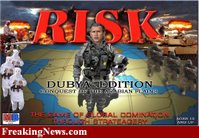 Bush and Cheney will not accept the findings of the Iraq Study Group. They will not change their position on the West Bank in Palestine. Because of that, they will not 'engage' with Syria about the Golan Heights or with Iran about nuclear weapons. Because of their rigidity there will be no consensus between the American people and the White House on Middle Eastern policy.
It serves no use to procrastinate and prevaricate any further by trying to cover up the gross incompetence of our government with the fig-leaf of a white paper 'Report' full of contradictions.
Following robust oversight by the next Congress, the President and Vice-President should be impeached for high crimes and misdemeanors. Or they should resign.
 Will my fellow Americans accept this?On March 21st 2006 Bush said at a press conference that the issue of removing troops from the country ''will be decided by future presidents." Is this the message my fellow Americans wished to communicate when they voted on 7 November?
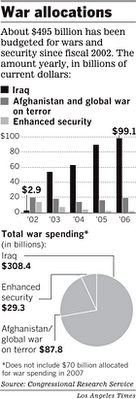
Bush's un-provoked, unnecessary, largely unilateral invasion and unplanned occupation of Iraq (UULUIUOI) has already cost future generations $350 billions. Including the money already approved, the cost of the total military spending for Iraq and Afghanistan could come close to $200 billion in 2007. About $120 billion was spent in the 2006 budget year, according to the Congressional Budget Office.
The evidence is accumulating that the figure the White House sends to Capitol Hill will not be limited to dollars critically needed for troops and war-fighting.
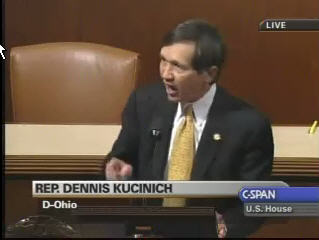
 In an interview with Truthdig’s Joshua Scheer, Dennis Kucinich says November 7th meant "NO". In part, this is what he said:
What we have here is a situation that is totally out of control. Not only does the administration feel unrestrained in [its] spending, but they also apparently feel unrestrained by the mandate which the American people gave the Democrats on November 7th. The Democrats in Congress have a moral obligation to take a new direction with respect to Iraq, and that direction is out. The administration is borrowing money to fund this war. This administration has not shown any willingness to suffer any kind of oversight on the spending, but the ultimate oversight is when the bill is up for passage.
War spending generates a forward momentum—the more you spend, the more you are going to spend in the future. And so regardless of what anyone in the Pentagon is saying, Congress has the obligation here to cut off funds, and that’s what I’m calling for. We have to stop this! We have to stop this war and we have to stop the potential expansion of the war and we have to stop this administration from getting another $130 billion to promote war anywhere [it] please[s].
Whether it’s $130 billion or $30 billion, we are going to have to put an end to the funding of this Iraq war. That’s the only way it’s going to end. There is no other way. This is up to Congress now. This is not about George Bush anymore. The president has already made clear his intentions: He’s going to keep the troops there until the end of his term and it does not matter what that Iraq study group says.
Congress has a specific directive here from the American people as a result of the November 7th election, so the spring will tell the story of the next two years. It will tell if the Democrats are going to rescue the nation from a deepening war in Iraq, or whether we are going to permit the administration to carry the war through the end of [Bush’s] term.... You can’t simultaneously say you oppose the war and vote for the funding, and you can’t maintain [that] this is for the troops in the field when the money is there now to bring the troops home. So the moment of truth is fast approaching.
The money’s there to bring the troops home and that money is continued in the so-called bridge fund that was passed September 30th, 2006. We have the money to bring the troops home. The idea that the troops will be stranded is false and is being spread by people who want to keep the war and the war spending going.
 Congress has to recognize that the American people took a stand in November. What could be more profound than changing the entire Congress, the House and the Senate, over the issue of the war? Is there anybody out there who could argue that the American people asked for more money for Iraq? That the American people asked for more troops for Iraq? Did the American people ask to prolong or intensify the war in Iraq? None of those things are true. What the American people want is to get out of Iraq. The test is going to be on this bill. The vote on this bill is going to be the moment of truth.
I agree with Congressman Kucinich. This was an elective war that Bush and Cheney ordered for the American people. Current and future generations will have to pay too much for it. It should be ended before the Presidential elections of 2008.
Bush and Cheney ordered the meal. They should be made to eat their war, before they are excused from the table.
A proud man leaves the world stage with his humility, honesty, and integrity intact.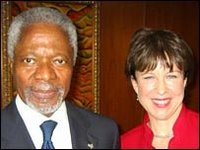
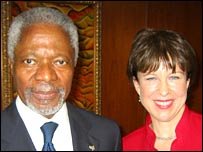
Outgoing UN secretary general Kofi Annan gave his last BBC interview to Lyse Doucet. He steps down on 31 December and will be succeeded by South Korea's foreign minister Ban Ki-moon.
Below are my excerpts from BBC's excerpts from the interview:
BBC: Was the invasion of Iraq in 2003, without a Security Council resolution, the most difficult point for you in your term?
Kofi Annan: It was extremely difficult, because I really believed that we could have stopped the war and that if we had worked a bit harder - given the inspectors a bit more time - we could have.
I was also concerned that for the US and its coalition to go to war without the consent of the Council in that particular region, which has always been extremely controversial, would be extremely difficult and very divisive and that it would take quite a long time to put the organisation back together, and of course it divided the world too . . . .
 There follows in this interview a series of exchanges where Lyse Doucet persistently tries to get The Secretary-General to say whether Iraq is in a state of civil war, up or down. Evasive and diplomatic until the end, Annan states the truth.
Kofi Annan:I think, given the level of violence, the level of killing and bitterness and the way that forces are arranged against each other. A few years ago, when we had the strife in Lebanon and other places, we called that a civil war. This is much worse.
BBC: You must in some way feel sadly vindicated - in 2003, in March, you said that: "A war can lead to unintended consequences, producing new threats and new dangers."
. . . . Was it a mistake? Some Iraqis say that life is worse than it was under a dictator.
Kofi Annan: I think they are right in the sense of the average Iraqi's life. If I were an average Iraqi obviously I would make the same comparison, that they had a dictator who was brutal but they had their streets, they could go out, their kids could go to school and come back home without a mother or father worrying, "Am I going to see my child again?" And the Iraqi government has not been able to bring the violence under control.
The society needs security and a secure environment for it to get on - without security not much can be done - not recovery or reconstruction.
. . . .
BBC: Because there's no denying the risks at stake here - you met Middle East leaders this summer, they said to you that the whole region had been radicalised and destabilised. In fact, they said it was a disaster.
Kofi Annan: This is the feeling of the leaders in the region and in the streets as well.
The people are worried - they are worried about the future, they are worried about the broader Middle East, they are worried about the tensions with Iran, they are worried about Iraq, Lebanon, Palestine, and some would even stretch it as far as to Afghanistan.
So we have a very worrisome situation in the broader Middle East and we also need to look at them as a whole, not as individual conflicts. There are linkages between these crises.
In true BBC fashion, Lyse Doucet asks the tough questions of the retiring Secretary-General:
BBC: But when you see this unfolding, in the dark of night, do you ever think: "I, as the secretary general, could have done more to stop it, personally"?
. . . .
Kofi Annan: I think as secretary general I did everything I could. I worked with the member states, and you've read some of the comments I made before the war.
BBC: But you made many comments, for example, you waited until 2004 in a BBC interview to say the war was "illegal".
Kofi Annan: No.
BBC: Why didn't you stand up in the UN Security Council and say in 2003: "This war is illegal without a Security Council resolution"?
Kofi Annan: I think, if you go back to the records, you will discover that before the war I said that for the US and its allies to go to war without Security Council approval would not be in conformity with the Charter.
BBC: Which is a very sort of UN bureaucratic thing, rather than saying "it's illegal" which would have much more impact. And your aides say to me: "This was Kofi Annan, the cautious man, not wanting to confront."
Kofi Annan: It's easy to - what do the Americans call it? - "Saturday morning quarter-backing", or "armchair critic". I mean, it was one of those situations where even before a shot had been fired, you had millions in the street and it didn't make a difference.
This last is a reference to the fact that there were massive demonstrations around the world on the eve before Bush's un-provoked, unnecessary, largely unilateral invasion and unplanned occupation of Iraq. This act of war was the first ever I recall that had become the object of mass demonstrations before it started.
BBC: But for you, in that position, a very difficult, devastating time. Your aides say that you lost your voice.
Kofi Annan: Yeah, it was very difficult, very painful, because I really, really felt we should have tried harder to avoid it and I was very worried about the consequences and the results.
 Unstintingly, Lyse Doucet presses the Secretary-General on Darfur.
BBC: Another big challenge for you: the situation in Darfur. Many say that Darfur has proven that the United Nations cannot stop genocide.
Kofi Annan: Who and what is the United Nations? The United Nations are the member states . . . Your government and mine.
BBC: It's been going on for three years, more than 200,000 people have died, two to three million have been displaced.
Kofi Annan: I'm not disputing the gravity of the situation. We've been pushing very hard to get peacekeepers in.
BBC: One of the big successes of UN reform was this Responsibility to Protect. But you're not protecting - it's been three years.
Kofi Annan:I myself have made that point, that member states made a solemn pledge to protect.
Sudan has made it quite clear to the whole world that it will not accept UN peacekeepers. The resolution says we should deploy the troops with the cooperation and consent of the Sudanese.
If the Sudanese do not give their consent, no government, not yours or mine, is going to give troops for a peacekeeping operation in Darfur.
BBC: So, people said after Rwanda, after Srebrenica, "never again". But it's happening again.
Kofi Annan: It is deeply, deeply disappointing and it's tragic but we do not have the resources or the will to confront the situation - as in, If you did it, would you maker the situation worse, or would it be better?
I mean, I have gone out and indicated to the Sudanese that if they cannot protect their people, and they are refusing to let the international community come in and assist, they will be held individually and collectively responsible for what is happening and what happens.
BBC: We're told that you're going to make this one of your priorities to the day that you leave, on 31 December.
Kofi Annan: You mean Darfur? I've told you, it's very tragic and painful, not only [to me] as secretary general but as a human being and as an African, and I hope all of us feel that way. I'm going to work on it - Darfur and one or two other issues which I'm working on - up until the last day.
Lyse Doucet follows with a series of questions pertaining to sexual abuses by UN peacekeepers. I summarize the Secretary-General's answers.
Kofi Annan: We take zero tolerance very seriously and we have tightened up and we have groups that work in these peacekeeping operations . . . . we recruit these people from the wider world - we don't have troops, we borrow them from governments . . . it's a problem in society that we have to recognise and deal with, and we need to be realistic that some of these incidents may happen and therefore set up systems and be vigilant to make sure that it does not happen in our operations, particularly when we are there to protect the most vulnerable . . . . I think [you can't pretend that if] you have an absolute position on everything, the moment you declare zero tolerance, everything vanishes . . . .
Lyse Doucet follows with a couple of questions about an inpending diplomatic/military confrontation with Iran over nuclear capabilities. The Secretary-General urges caution upon an unnamed "that power".  Lyse Doucet winds up the interview by asking about Annan's biggest regret:
Kofi Annan: My biggest regret - well, it's also linked to Iraq. It was 23 wonderful colleagues and friends I sent to Iraq who got blown away. They went to Iraq to try and help clean up in the aftermath of a war I genuinely did not believe in, and these people, who were wonderful professionals, wonderful friends, were blown up overnight. And of course when that happens, you ask questions, you know: Would they be here if there hadn't been this situation? Would they be here if I hadn't asked them to go?
Kofi Annan casts a long shadow as a professional diplomat who retires without having lied for his country.
Part of the Progressive Plan Against Terrorists of Global Reach
 Iraq is not the "central front" on the so-called "war on terror".
Every where we congregate in the form of crowds, spectators, travellers, commuters are, though.
Consequently, as a Progressive, I support the maximal or optimal installation of Backscatter Technology - as much as medical safety and Homeland Security budgets permit.
By Christmas, Sky Harbor International Airport in Phoenix will test a new federal screening system that takes X-rays of passenger's bodies to detect concealed explosives and other weapons. The technology, called backscatter, has been around for several years but has not been widely used in the U.S. as an anti-terrorism tool because of privacy concerns.
TSA's Web site indicates that the Backscatter technology will be used initially as a secondary screening measure, meaning that only those passengers who first fail the standard screening process will be directed to the X-ray area.
When I first heard of it, soon after 9-11, I was immediately sold. I haven't changed my mind. I would like to see the program expanded and become a primary system.
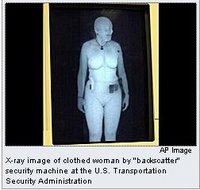 The Transportation Security Administration said it has found a way to refine the machine's images so that the normally graphic pictures can be blurred in certain areas while still being effective in detecting bombs and other threats.
High-resolution images -- which clearly depict the outline of the passenger's body, plus anything attached to it, such as jewelry -- might be judged as too invasive.
The system will be set up so that the image can be viewed only by a security officer in a remote location. Other passengers, and even the agent at the checkpoint, will not have access to the picture.
In addition, the system will be configured so that the X-ray will be deleted as soon as the individual steps away from the machine. It will not be stored or available for printing or transmitting,
The radiation is lower than the kind a doctor would use to look at organs or bones. It's low enough it can be used safely on a pregnant woman.
 In a backscatter portal, a single ray is passed rapidly over a person's body, taking just eight seconds to scan each side. Data collected from the position of scattered photons are processed to deliver a photographic-quality image. The process uses high-energy X-rays, which tend to reflect (scatter back) from objects, unlike the low-energy X-rays used for medical procedures, which tend to penetrate objects. Because of an effect called "Compton scattering," the rays are deflected differently depending on the density of the matter being scanned. They penetrate clothing but not flesh and are blocked more completely by solid objects. This effect means that most weapons will be sharply revealed by backscatter imaging.
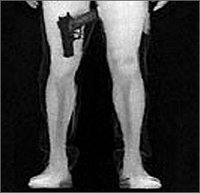 The process is anonymous: as long as you don't pack pistol, knives or plastic explosives on your person, no one will ever associate your name to your physique.
Privacy-smivacy! We're talking about the front defensive lines in the struggle against world terror.
ASAP, I would like to see this technology become commonplace, installed in all target-rich environments in the civilized world: air terminals, athletic events, etc.
Install it as much as medical safety and budget considerations permit. Privacy is not an issue for me.
What's Happened to Our Original Mission?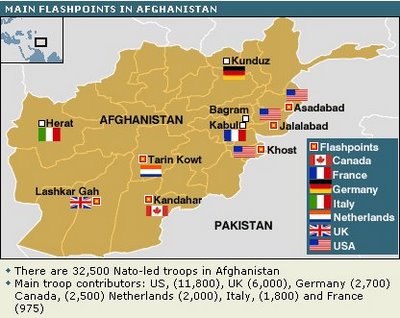 In Riga (Latvia), NATO leaders agreed Wednesday to come to each other's aid in emergencies anywhere in Afghanistan, but their summit failed to muster significant reinforcements for operations in Taliban strongholds.
Only the Poles kicked in sizable additional contribution. President Lech Kaczynski did not mention names when he observed, The summit did not have the character of a major breakthrough. Not all countries showed the same level of determination.
The critique by David Bercuson, a military analyst at the University of Calgary, was thatThe political leadership of NATO clearly does not believe that this mission is important enough to commit the resources necessary for success . . . NATO is failing the test in Afghanistan. And if it fails the test in Afghanistan, I don't think there can be any consideration for NATO doing anything else.
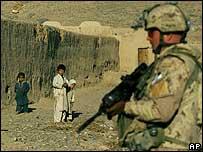 The Canadians feel the brunt of the bloodletting in Afghanistan has fallen on their 2,300 soldiers in Kandahar. The inaction by NATO leaders in Riga mean they will keep fighting and dying without reinforcements in the province that is the Taliban's heartland.
 A retired Canadian major-general, Lewis MacKenzie, says NATO needs many more soldiers in Afghanistan to keep up the pressure on the Taliban militants.
We've got to dig in and protect the area we've taken from the bad guys. Our guys are kind of pinned to the ground and can't exploit success. . . . I think everyone can deduce an emergency means that those of us in the south are in danger and need help . . . Unless some large number of nations get off their butts … and get down to Southern Afghanistan and augment our troops, then the mission is threatened. 30,000 more are needed.
What about the Afghanistan mission in general? General Joseph Ralston, former Supreme Allied Commander in Europe from 2000-2003, thinks it is in doubt, up for grabs.Events in Afghanistan are reaching a critical juncture, and European politics and perceptions as well as US commitments in Iraq may prevent NATO from getting the assets necessary to ensure victory. . . As a result, NATO has become an alliance of unclear political purpose and lacking military performance, as currently evident in Afghanistan. It cannot go on much longer in this way.
How did we get to where we are?
The attacks on America of 911 triggered Article V in NATO's Charter:The Parties agree that an armed attack against one or more of them in Europe or North America shall be considered an attack against them all and consequently they agree that, if such an armed attack occurs, each of them, in exercise of the right of individual or collective self-defence recognized by Article 51 of the Charter of the United Nations, will assist the Party or Parties so attacked by taking forthwith, individually and in concert with the other Parties, such action as it deems necessary, including the use of armed force, to restore and maintain the security of the North Atlantic area.
 When that project was launched - Bush's un-provoked, unnecessary, largely unilateral invasion and unplanned occupation of Iraq (UULUIUOI) - the alliance openly split, and has never really come together since. Because they wouldn't play our football game in the Baghdad Bowl, Rumsfeld dissed them as "Old Europe". Remember that?
Is that why at Riga this week, Germany, Italy and Spain made it clear that their troops would remain in the north, far from the fighting? And France?
NATO is in Afghanistan because the attacks on the USA of 9-11 triggered Article V. (All for one and one for all.) Why has the ardour of NATO members cooled? Could it be that now our USA is using only a fraction of its fighting forces in Afghanistan? Could it be that rest of our military assets are being squandered on a frivolous adventure elsewhere, completely irrelevant to the 9-11 attacks?
It was us Americans who were attacked by Osama bin Laden. I can't believe I've been that inattentive but I have yet to see any European or Canadian openly complain that they have been left to pull American chestnuts out of the fire in Afghanistan.
Why is that?
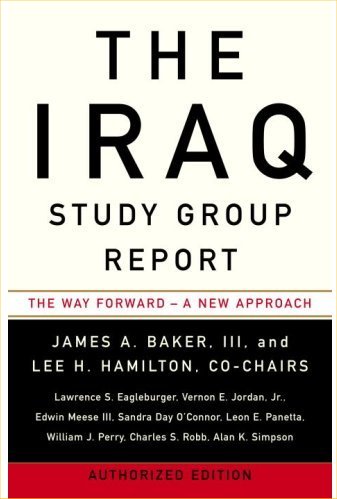 I've seen enough. This is mandatory reading for the American people because it is primarily addressed to us.
 as an exacting editor and insisted that the report be written and organized so that it could be readily understood by people who are not foreign policy wonks or pundits. I think we should all embrace this Report as a document addressed to us, the American people.
 In the meantime, I have ordered my copy of The Way Forward - A New Approach. I plan to read it. But more important than that: I plan to carry it around with me as I go shopping, to work, to walk my dog, to wait in the doctor's office. I intend it to become my own personal bumpersticker. Wherever I am, it will say to everyone who notices,