


The Gambler
-
America gambled...
America lost...
As our war stance has shown... is showing...
Our account is now being drained... thats disturbing
The gamblers amo...
7 hours ago
..... it's hard not to conclude that hysteria is now the dominant characteristic of our politics and civic conversation.
How else to explain the fact that questions like secession and nullification — issues that were resolved in blood by the Civil War more than a century ago — have come alive again and are routinely tossed around, not just by fringe figures but by Republican officeholders and candidates?
For example ... a Tennessee congressman who opposes the recently enacted healthcare reforms and is running for governor, told an interviewer that he hopes "the American people will go to the ballot box in 2010 and 2012 so that states are not forced to consider separation from this government."
... GOP candidates for statewide office in various Midwestern and Southern states are promoting the notion that states ought not to enforce any federal law not approved by at least two-thirds of their state legislators. It's as if John C. Calhoun suddenly had risen from the grave and had a talk show
In Nevada, the Republican candidate for the U.S. Senate has discussed abolishing Social Security and darkly mused over whether Washington's alleged overreaching may require a "2nd Amendment solution." That means guns, a prospect that could be facilitated in one state after another by an outfit called Appleseed, which holds weekend seminars whose participants are given a mix of Minuteman pseudo-history and instruction on marksmanship.
... attempts to repeal sections of the Constitution continue apace. The so-called 10thers, who want to roll back 100 years of federal law and regulation in order to assert rights under the 10th Amendment, are almost unremarkably ubiquitous in the GOP.
Candidates across the country pining for "tea party" support have endorsed repeal of the 17th Amendment, which would end popular election of U.S. Senators and return their selection to state legislatures, a step that theoretically would "restore states' rights."
The most popular such movement involves abolishing or gutting the 10th Amendment as a way to deny American citizenship to the U.S.-born children of undocumented immigrants. . . . speculates that such children actually are terrorist moles planted here to grow up as U.S. citizens as part of a long-range plot.
Nothing quite tops the anti-Muslim hysteria, which has led people to organize opposition to the construction of new mosques in places from Lower Manhattan to Temecula. One candidate for statewide office in Tennessee ... argues that the 1st Amendment does not cover Muslims.
Some inclined toward therapeutic explanations of history might attribute all this to a kind of collective post-traumatic stress syndrome engendered by the lingering, still-unresolved aftermath of the horrific events of 9/11. Others might point to the dislocating effect of electing an African American president to govern a society in which strong currents of racial anxiety still eddy beneath the surface of everyday life. Perhaps both forces act in unseen concert.
Back in the early 1970s — an era whose tumult we yet may come to regard as benign — social scientists here and in Britain coined the term "moral panic" to describe what can happen when groups of people are seized by an exaggerated fear that other people or communal forces threaten their values or way of life. The scholars described those who promoted the panic's spread as "moral entrepreneurs" — a term that takes on a deep resonance when you consider the commentators and politicians who have attached themselves, and their interests, to the "tea party" and its attendant movements.
In the midst of moral panic, inchoate indignation stands in for reason; accusation and denunciation supplant dialogue and argument; history and facts are rendered malleable, merely adjuncts of the moral entrepreneur's — or should we say provocateur's — rhetorical will. As we now also see, a self-interested mass media with an economic stake in the theatricality of raised and angry voices can transmit moral panic like a pathogen.
 The statement by National Security Advisor Gen. James Jones condemned Julian Assange's Wikileaks as endangering lives of our soldiers and their mission in Afghanistan:
 The United States strongly condemns the disclosure of classified information by individuals and organizations which could put the lives of Americans and our partners at risk, and threaten our national security. Wikileaks made no effort to contact us about these documents - the United States government learned from news organizations that these documents would be posted. These irresponsible leaks will not impact our ongoing commitment to deepen our partnerships with Afghanistan and Pakistan; to defeat our common enemies; and to support the aspirations of the Afghan and Pakistani people.What endangers lives is stupidity. What Jones is saying is that leaks endanger Obama's mission.
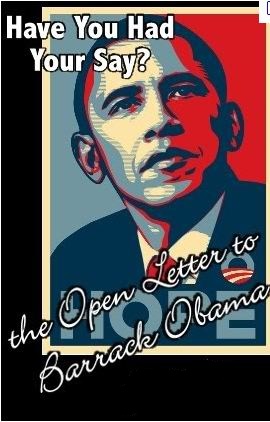 PLEASE: be the man of your speeches.
 James Carroll, Boston Globe columnist and author of the bestselling Constantine’s Sword, wrote the following in review of Tom Engelhardt's current book, The American Way of War: How Bush’s Wars Became Obama’s:
.... the Pentagon-driven mistakes, myths, self-deceptions, and crimes ... have wreaked havoc in Iraq and Afghanistan. That the American wars are proving to be as fruitless now as they were then unnecessary keeps them from rising to the level of actual tragedy....Well, I don't know about that. Judging from Engelhardt's current perspectives, American statecraft is well on its way toward tragedy of Shakespearian proportions:
 Armed with a rocket-propelled grenade launcher and an automatic rifle, a rogue Afghan soldier attacked a group of British troops early Tuesday in southern Afghanistan, killing three of the soldiers and wounding four others before escaping.


